
African violet not blooming: causes and fixes
Your African violet most likely needs more light to bloom, though excess fertilizer and unsuitable temperatures can also reduce flowering. ([yardandgarden.extension.iastate.edu](https://yardandgarden.extension.iastate.edu/faq/my-african-violets-arent-blooming-well-why))
Not sure it's this? Scan your plant — free
What it is
Flowering failure means an African violet produces few or no flowers despite continuing to grow leaves. It is a symptom rather than a disease diagnosis: unsuitable growing conditions can limit flowering without an infection being present. ([yardandgarden.extension.iastate.edu](https://yardandgarden.extension.iastate.edu/faq/my-african-violets-arent-blooming-well-why))
Also called: Poor flowering, Lack of blooms
Plants affected: African violets (Saintpaulia species and hybrids)
Symptoms
- Few or no flowers, sometimes despite plentiful leafy growth. ([yardandgarden.extension.iastate.edu](https://yardandgarden.extension.iastate.edu/faq/my-african-violets-arent-blooming-well-why))
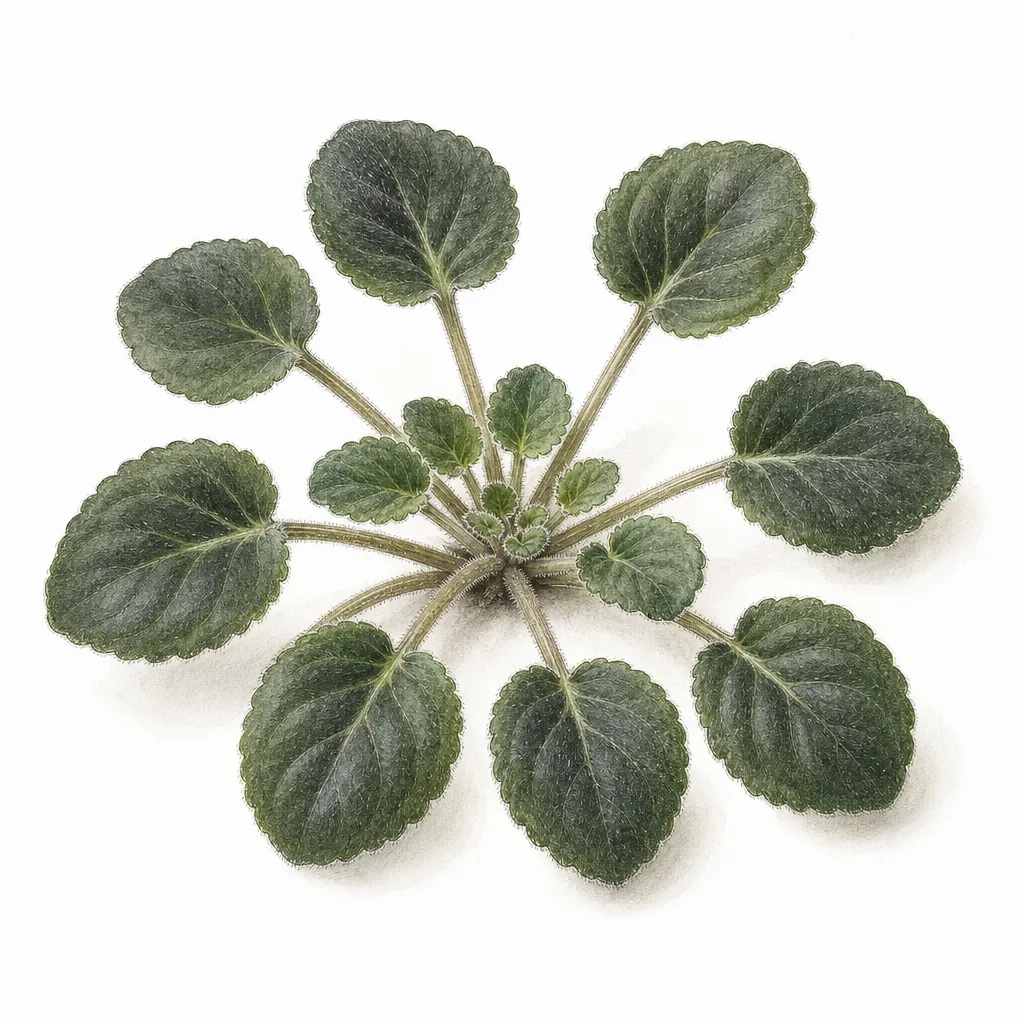
- Thin, dark-green leaves with unusually long leaf stems when light is insufficient. ([ag.purdue.edu](https://ag.purdue.edu/department/hla/extension/extension-publications-library/ext-pubs/ho-10-w.html))
Causes
- Insufficient light or too few hours under a grow light. ([yardandgarden.extension.iastate.edu](https://yardandgarden.extension.iastate.edu/faq/my-african-violets-arent-blooming-well-why))
- Too much fertilizer, which can encourage leaves rather than flowers. ([yardandgarden.extension.iastate.edu](https://yardandgarden.extension.iastate.edu/faq/my-african-violets-arent-blooming-well-why))
- Cool conditions, or temperatures above 80°F that slow flowering. ([extension.umn.edu](https://extension.umn.edu/garden-and-home/yard-and-garden/gardening-in-minnesota/african-violets))
- Inadequate nutrients, especially when pale leaves accompany poor growth. ([extension.umn.edu](https://extension.umn.edu/garden-and-home/yard-and-garden/gardening-in-minnesota/african-violets))
How to tell it apart
Check light first, especially if leaf stems are stretched. Review feeding next: vigorous leafy growth with few flowers can suggest excess fertilizer, while pale leaves and slow growth can suggest too little nutrition. These clues help narrow the cause but do not prove it. ([yardandgarden.extension.iastate.edu](https://yardandgarden.extension.iastate.edu/faq/my-african-violets-arent-blooming-well-why))
- Root rot
- Unlike flowering failure alone, root rot can cause wilting even in moist soil; affected roots may be brown, mushy and slimy. ([extension.umn.edu](https://extension.umn.edu/garden-and-home/yard-and-garden/gardening-in-minnesota/african-violets))
- Excess light
- Look for stunted growth, short leaf stems and small, leathery or crinkled leaves rather than stretched stems. ([ag.purdue.edu](https://ag.purdue.edu/department/hla/extension/extension-publications-library/ext-pubs/ho-10-w.html))
- Pest damage
- Visible insects, white cottony deposits or distorted new growth suggest pests rather than a light problem alone. ([gardens.si.edu](https://gardens.si.edu/learn/educational-resources/plant-care-sheets/care-of-african-violets/?utm_source=openai))
Treatment
- 1. Improve light first Move the plant to a bright north- or east-facing window, avoiding direct sun. If daylight is inadequate, supplement with a grow light on a timer for 14–16 hours daily, leaving 8–10 hours dark. ([ag.purdue.edu](https://ag.purdue.edu/department/hla/extension/extension-publications-library/ext-pubs/ho-10-w.html))
- 2. Check temperature at the plant Aim for temperatures in the 70s°F by day and 65–70°F at night. Move it away from a chilling window overnight. ([extension.umn.edu](https://extension.umn.edu/garden-and-home/yard-and-garden/gardening-in-minnesota/african-violets))
- 3. Correct watering and drainage Keep the mix moist, not soggy. For bottom watering, stand the pot in 1 inch of room-temperature water; remove it when the surface feels moist and let it drain fully. Never leave it standing in water. ([extension.umn.edu](https://extension.umn.edu/garden-and-home/yard-and-garden/gardening-in-minnesota/african-violets))
- 4. Adjust feeding instead of adding extra If feeding is needed during active growth, use a balanced liquid houseplant fertilizer at quarter strength with watering, following its label. Recommendations differ: Smithsonian suggests dilute feeding with each watering; Iowa State suggests every two weeks in spring through fall and usually none in winter. Do not combine schedules. ([gardens.si.edu](https://gardens.si.edu/learn/educational-resources/plant-care-sheets/care-of-african-violets/?utm_source=openai))
Prevention
- Maintain consistent bright light; rotate the pot occasionally for even growth. ([ag.purdue.edu](https://ag.purdue.edu/department/hla/extension/extension-publications-library/ext-pubs/ho-10-w.html))
- Use a pot with drainage holes and loose, well-drained potting mix. ([ag.purdue.edu](https://ag.purdue.edu/department/hla/extension/extension-publications-library/ext-pubs/ho-10-w.html))
- Flush the mix with plain water monthly, allowing complete drainage, to reduce fertilizer-salt buildup. ([extension.umn.edu](https://extension.umn.edu/garden-and-home/yard-and-garden/gardening-in-minnesota/african-violets))
When to worry
Act promptly if the plant wilts in wet soil or has mushy roots; extensive root loss makes recovery unlikely. If you find insects, cottony deposits or distorted growth, ask your local extension service to help identify the problem before choosing treatment. ([extension.umn.edu](https://extension.umn.edu/garden-and-home/yard-and-garden/gardening-in-minnesota/african-violets))
Safety
African violets are listed as non-toxic to cats and dogs. Fertilizer still needs careful handling: follow the label, avoid contact with eyes and mouth, and store it in its original labeled container, locked away from children and pets. For a suspected human exposure, contact Poison Control at 1-800-222-1222; for a pet exposure, contact a veterinarian. ([aspca.org](https://www.aspca.org/pet-care/aspca-poison-control/toxic-and-non-toxic-plants/african-violet))
Sharing your home with pets or small children? See which plants our sources call safe for cats, dogs and kids.
FAQ
Why does my African violet grow leaves but no flowers?
Too little light is a leading possibility; excess fertilizer can also encourage leafy growth at the expense of flowers. ([yardandgarden.extension.iastate.edu](https://yardandgarden.extension.iastate.edu/faq/my-african-violets-arent-blooming-well-why))
Can African violets bloom under grow lights?
Yes. Extension guidance supports artificial lighting; a 14–16-hour daily schedule is recommended by Minnesota Extension. ([extension.umn.edu](https://extension.umn.edu/garden-and-home/yard-and-garden/gardening-in-minnesota/african-violets))
Do I need a special bloom fertilizer?
Not necessarily. Smithsonian recommends a balanced fertilizer with equal proportions of nitrogen, phosphorus and potassium, diluted before use. ([gardens.si.edu](https://gardens.si.edu/learn/educational-resources/plant-care-sheets/care-of-african-violets/?utm_source=openai))
Should I feed it during winter?
Guidance differs. Iowa State usually recommends skipping winter feeding; Purdue allows it for plants grown under artificial light. ([yardandgarden.extension.iastate.edu](https://yardandgarden.extension.iastate.edu/faq/my-african-violets-arent-blooming-well-why))
Sources
- African violets — University of Minnesota Extension
- My African violets aren't blooming well. Why? — Iowa State University Extension
- HO-10: African Violet Care — Purdue University Extension
- Toxic and Non-toxic Plants: African Violet — ASPCA
- Lawn chemicals: Protect yourself from potential poisonings — Poison Control