
Tomato leaves curling and turning brown: causes and fixes
When tomato leaves curl and turn brown, the most likely culprit is environmental stress from high heat and erratic soil moisture causing leaf roll and edge scorch, though fungal blights, bacterial canker, or herbicide exposure can produce similar damage.
Not sure it's this? Scan your plant — free
What it is
Learn why tomato leaves curl up and turn brown, how to tell environmental stress from blights or herbicide drift, and how to revive your tomato plants.
Also called: Physiological leaf roll, Tomato leaf scorch, Tomato leaf roll
Plants affected: Tomato (Solanum lycopersicum), Pepper (Capsicum annuum), Eggplant (Solanum melongena)
Symptoms
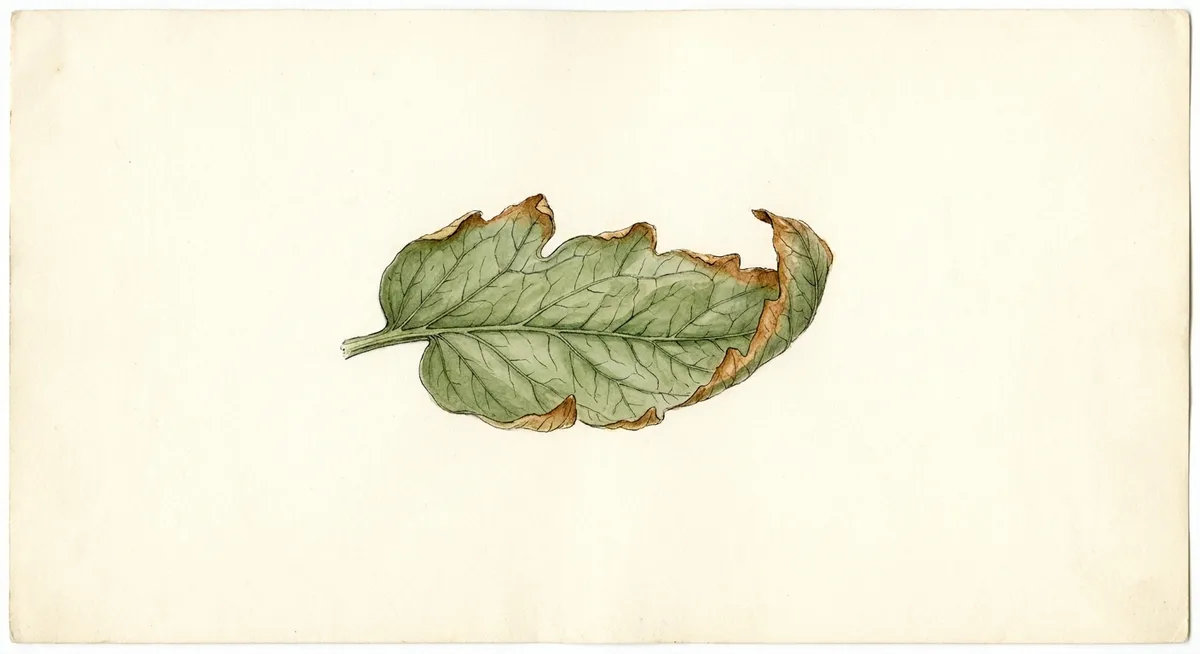
- Leaf margins rolling upward and inward into cylinder or taco shapes
- Lower or older leaves turning thick, firm, and leathery
- Leaf edges (margins) or tips turning crispy, dry, and brown
- Dark brown spots with concentric yellow rings on lower foliage
- Cupping or downward twisting on tender new growth
Causes
- Physiological leaf roll triggered by hot, dry weather and rapid moisture swings
- Leaf scorch from intense sunlight combined with low soil moisture
- Fungal foliar diseases such as early blight (Alternaria solani) or Septoria leaf spot
- Drift from synthetic lawn herbicides (such as 2,4-D or dicamba) or contaminated compost
- Vascular bacterial infections such as bacterial canker
- Over-fertilizing with excessive nitrogen fertilizer, especially after severe pruning
How to tell it apart
To identify what is happening, look at the position of the curling and the pattern of browning. If older lower leaves roll neatly upward into troughs, feel thick or leathery, and develop dry, crispy brown edges during a heatwave, physiological leaf roll and scorch is most likely. If the browning begins as isolated dark spots with yellow rings on lower leaves that gradually shrivel and curl, a fungal infection like early blight is more probable. If new top growth twists abnormally into shoestrings with downward-cupped leaflets and bleached or brown tips, suspect weedkiller drift.
- Early Blight (Alternaria solani)
- Early blight produces distinct brown spots with concentric target-like rings surrounded by yellow halos on lower leaves, whereas physiological leaf roll simply curls the leaf without target spots.
- Herbicide Drift Damage
- Herbicide injury strikes tender young shoots first, causing downward twisting, distorted stems, and narrow fan-shaped leaves, while environmental leaf roll primarily affects older lower leaves rolling upward.
- Bacterial Canker
- Bacterial canker causes leaflets to curl upward accompanied by brown marginal dieback ('firing') along the outer edges, but it also causes brown streaks or open splits on stems and vascular browning inside the stem.
- Tomato Yellow Leaf Curl Virus
- Leaves curl sharply upward and turn pale yellow along the margins, but the entire plant becomes severely stunted with deformed blossoms, unlike environmental roll which does not stunt overall plant height.
Treatment
- Establish a consistent, deep watering routine Give your tomatoes 1 to 2 inches of water per week, delivered directly to the root zone early in the morning. Water deeply 2 to 3 times per week rather than shallowly every day so the soil remains evenly moist 6 to 8 inches down. Never allow the soil to swing between bone-dry and waterlogged.
- Lay down an organic mulch layer Spread a 2- to 3-inch layer of clean straw, untreated grass clippings, or shredded leaves across the garden bed around each plant. Keep the mulch 2 inches away from the central tomato stem to maintain airflow while cooling root temperatures and slowing moisture evaporation.
- Put up temporary afternoon shade during heat spikes If air temperatures climb above 90°F (32°C), drape a 30% to 50% shade cloth over stakes or tomato cages to shelter plants from direct midday sun. Leave the sides open for ventilation, and keep the cloth up during hot dry stretches until milder weather returns.
- Prune out diseased and severely dead lower foliage Using clean bypass pruners wiped with 70% isopropyl alcohol, snip off the lowest brown, yellowed, or spot-covered leaves. Remove foliage up to 8 to 12 inches off the ground to eliminate soil-borne fungal spores and encourage air movement. Dispose of trimmed leaves in the trash, not your compost pile.
- Apply a protective copper fungicide if spots indicate fungal disease If you observe expanding brown target spots or fungal blight, spray foliage thoroughly with a liquid copper fungicide or biofungicide. Coat both sides of the leaves in the early morning or evening; reapply every 7 to 10 days if humid, wet conditions persist. Follow all label directions carefully and keep treatments away from pets and children.
Prevention
- Maintain uniform soil moisture using drip irrigation or soaker hoses at the soil line.
- Keep soil insulated year-round with a 2- to 3-inch blanket of organic mulch.
- Avoid high-nitrogen fertilizers once plants begin flowering; switch to balanced or higher potassium and phosphorus blends.
- Space tomato plants at least 24 to 36 inches apart to promote rapid drying and cross-ventilation.
- Never apply lawn weedkillers on windy days, and test outside compost or manure on a potted seedling before adding it to vegetable beds.
When to worry
Do not panic if older lower leaves curl up like tacos during hot weather while the rest of the plant stays vigorous and flowers set fruit; physiological roll rarely affects harvest yields. Worry if browning spreads rapidly up the main stem, if stems develop dark brown cankers, if fresh top shoots emerge twisted and stunted, or if leaves wilt and collapse entirely despite moist soil.
Safety
Tomato leaves, vines, and green stems contain solanine and tomatine, which are toxic to dogs, cats, and horses; if a pet chews or swallows foliage and develops vomiting, excessive drooling, or lethargy, contact your veterinarian or an animal poison control center right away. If you use any copper fungicide, biofungicide, or pest control spray, follow all package directions, wear protective gloves and eye protection during application, and store containers tightly sealed in a secure area away from children and pets.
FAQ
Should I cut off tomato leaves that are curling?
Only cut them off if they are heavily spotted, diseased, or dead and brown. Green leaves that are merely curled upward are still conducting photosynthesis and feeding the plant, so pruning them unnecessarily adds more stress.
Will curled tomato leaves ever uncurl?
Leaves that have curled due to short-term water stress often unroll once soil moisture is restored. However, leaves that have become thick, rigid, or leathery from prolonged heat usually remain rolled for the rest of the season, but new growth will emerge flat and healthy.
Can overwatering make tomato leaves curl and turn brown?
Yes. Waterlogged soil drowns tomato roots and blocks oxygen absorption, causing lower foliage to droop, roll inward, turn pale yellow, and eventually brown at the tips from root suffocation or rot.
Does leaf curling ruin the tomato harvest?
Physiological leaf roll caused by environmental stress does not significantly reduce fruit yield or quality. However, if curling is caused by fungal blights, viral diseases, or severe weedkiller drift, fruit production will often drop substantially.
Sources
- Clemson Cooperative Extension: Tomato Leaves Rolling?
- Washington State University Extension: Physiological Leaf Roll of Tomato
- South Dakota State University Extension: Why Are My Tomato Leaves Curled Up?
- Texas A&M AgriLife Extension: What Makes Tomato Leaves Twist or Curl?
- youtube.com
- ncsu.edu
- sdstate.edu
- youtube.com