
Spider Mites on Indoor Plants: Causes and Fixes
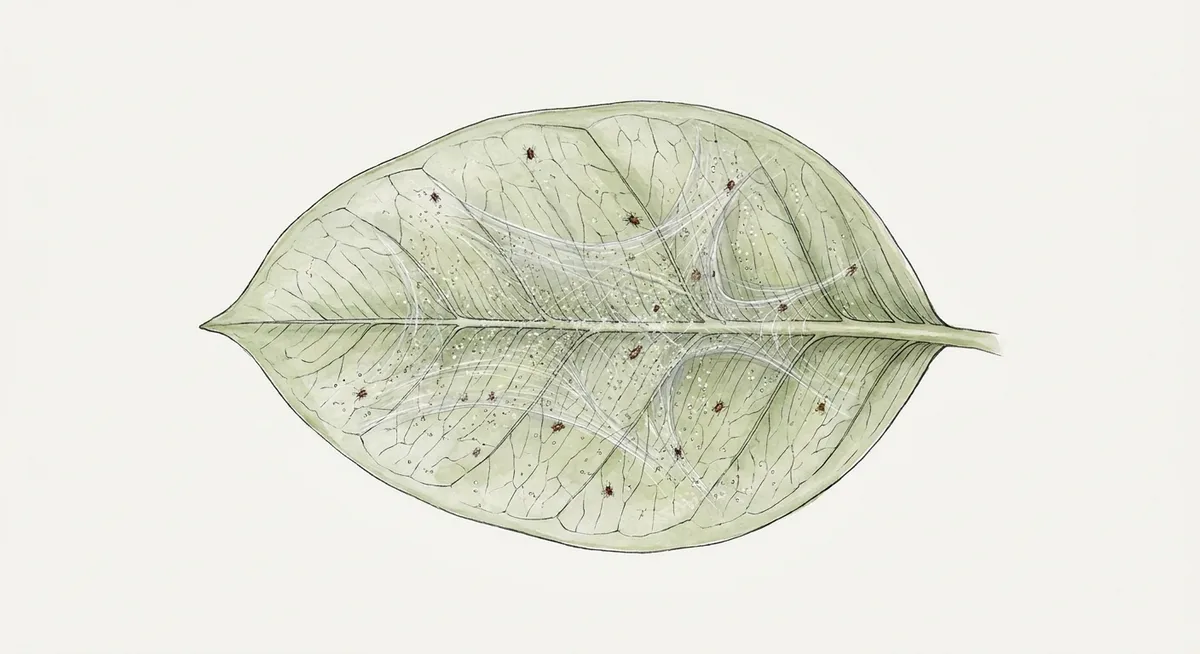
Fine webbing and dusty, pale speckling on your indoor plant leaves most likely indicate an infestation of spider mites, tiny sap-feeding arachnids that flourish in warm, dry indoor air.
Not sure it's this? Scan your plant — free
What it is
Spot and eliminate spider mites on houseplants using thorough water rinses and insecticidal soap, plus essential steps to stop them returning.
Also called: Twospotted spider mite, Red spider mite, Glasshouse spider mite, Webbing mite
Plants affected: Calathea, English ivy, Palms, Ficus, Monstera, Schefflera, Croton, Hibiscus
Symptoms
- Fine, pale yellow or white speckling (stippling) scattered across leaf surfaces
- Silky, delicate webbing stretched across leaf undersides, petioles, and stem crotches
- Foliage taking on a dull, dusty, faded, or bronzed appearance
- Yellowing, browning, curling, or premature dropping of older leaves
- Weakened vitality or stunted, distorted emerging foliage
Causes
- Dry ambient indoor air and low relative humidity, which accelerate mite reproduction
- Under-watering or chronic drought stress that compromises the plant's natural defense systems
- Warm, stagnant indoor rooms that shorten the mite egg-to-adult hatching cycle
- Introducing new houseplants or bringing outdoor container plants inside without quarantining them first
How to tell it apart
Hold a sheet of clean white printer paper underneath an affected leaf and tap the foliage firmly several times. If minute specks resemble grains of dust or pepper fall onto the page and begin slowly crawling after a few seconds, spider mites are most likely present. Examining the underside of the foliage with a 10x hand lens will typically reveal translucent oval bodies, tiny spherical eggs, and fine webbing spanning leaf veins.
- Thrips damage
- Thrips leave silvery foliage patches accompanied by tiny black droplets of tar-like excrement and do not spin webbing, whereas spider mites produce dense silken webs and yellow stippling without dark drops.
- Dust accumulation
- Household dust wipes away cleanly with a damp rag without leaving pale puncture marks on the leaf, and it remains completely motionless when tapped onto a sheet of white paper.
- Beneficial house spider webs
- Common house spiders construct loose, expansive webs between stems or across pots to snare flying insects, while spider mite webbing forms a tight, dense veil cloaking leaf junctions and leaf undersides.
Treatment
- Isolate the plant immediately Move the infested plant to a separate room away from all other houseplants this week. Spider mites disperse quickly across touching foliage and air currents. Maintain quarantine for at least 3 to 4 weeks until the pest is fully eradicated.
- Rinse foliage thoroughly with lukewarm water Take the plant to a shower stall, sink, or outdoor wash area, cover the soil surface with plastic wrap to prevent waterlogging, and spray the plant with a firm stream of lukewarm water. Direct the spray underneath every leaf and into leaf joints to physically knock down adult mites and wash away webbing.
- Spray leaf undersides with insecticidal soap or horticultural oil Once the foliage dries, spray all surfaces to the point of runoff using a ready-to-use insecticidal soap, diluted horticultural oil, or cold-pressed neem oil. Coat leaf undersides and stems completely, as these contact treatments must touch the mites to work. Always follow the product label instructions and keep out of reach of children and pets.
- Repeat treatments every 5 to 7 days Soaps and oils generally do not eliminate unhatched eggs, which take 3 to 7 days to hatch depending on room warmth. Reapply your chosen insecticidal soap or oil every 5 to 7 days for 3 to 4 consecutive cycles to intercept newly hatched nymphs before they mature into egg-laying adults.
- Prune severely damaged foliage Using clean shears sanitized with rubbing alcohol, clip away individual leaves that are heavily webbed, yellowed, or dried out. Discard clippings in an outdoor trash container rather than an open indoor bin.
Prevention
- Maintain indoor relative humidity between 50% and 60% around plants using an evaporative room humidifier or grouping plants together.
- Rinse or wipe houseplant leaves gently with a damp microfiber cloth every two to three weeks to remove dust and discourage early colonization.
- Keep indoor plants watered consistently according to their species' needs, avoiding prolonged periods of dry potting soil.
- Quarantine all newly acquired plants or outdoor plants returning indoors for at least 2 to 3 weeks before integrating them into your collection.
When to worry
Worry if thick webbing covers entire stems and shoot tips, the plant experiences widespread defoliation, or pest numbers continue rising despite three weeks of weekly contact treatments. If a heavily infested plant is small or easily replaceable, university extension specialists recommend safely discarding it to shield the rest of your collection from cross-infestation.
Safety
Many common houseplants (such as English ivy, Schefflera, and Ficus) contain insoluble oxalates or latex sap that can cause irritation, vomiting, or swelling if chewed by pets or children; if accidental ingestion occurs, contact a doctor, veterinarian, or a poison control center immediately. When handling or applying insecticidal soap, horticultural oil, or neem oil, store products in their original labeled containers tightly capped, keep them strictly out of reach of children and pets, work in a well-ventilated space, wear protective gloves, and always read and follow all label directions.
FAQ
Can spider mites live in the houseplant's soil, walls, or furniture?
Spider mites feed exclusively on live green plant tissue and cannot survive long-term or breed on walls, fabrics, or soil. However, adult mites can temporarily crawl on pot rims or hide under dead leaf litter, so cleaning the pot exterior and clearing surface debris during treatment is wise.
Can I use kitchen dish soap to spray spider mites?
Horticultural extension specialists do not advise using regular household dish soaps or detergents, because they contain harsh degreasers that strip the leaf cuticle and frequently cause foliage scorch. A commercially formulated insecticidal soap is safer for plant tissue and far more dependable.
Do spider mites bite people or household pets?
No. Spider mites possess specialized piercing-sucking mouthparts built specifically to drain plant cell sap and cannot bite, feed upon, or transmit pathogens to humans or domestic animals.
How long does it take to completely get rid of them?
Because treatment sprays do not reliably kill eggs, breaking the full reproductive cycle typically requires 3 to 4 weeks of consistent weekly washings and soap or oil treatments.