
Snake Plant Leaves Soft and Mushy: Causes and Fixes
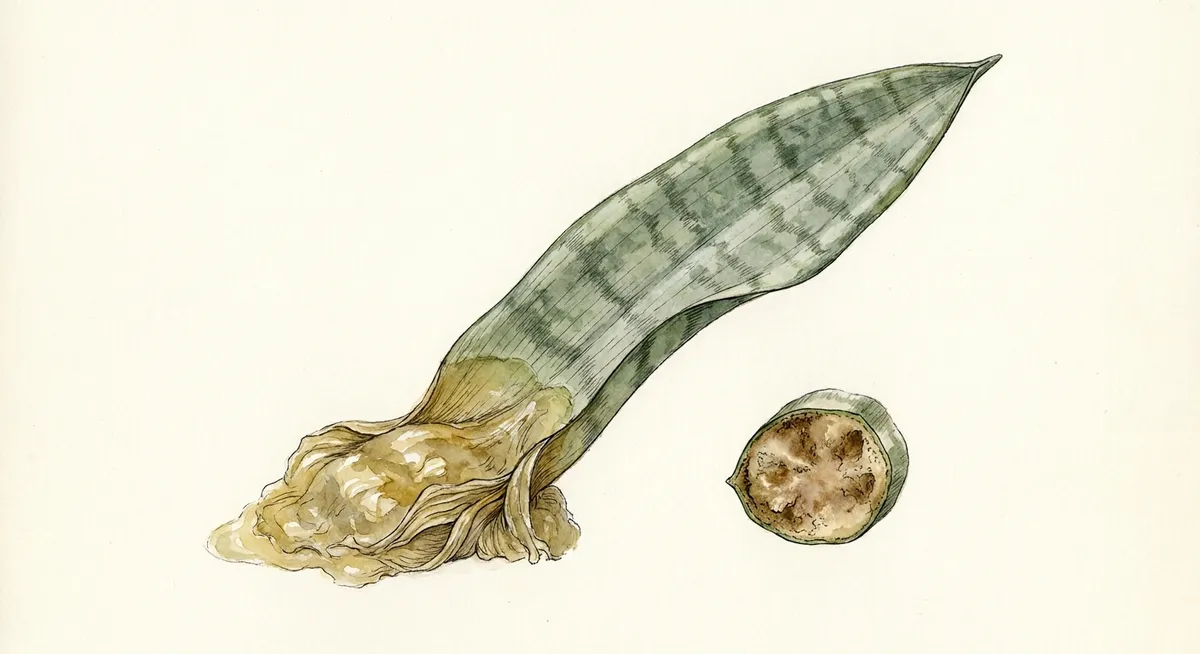
Soft, mushy snake plant leaves are most likely caused by overwatering and subsequent root or crown rot, where excess moisture suffocates roots and allows rot pathogens to break down leaf tissue.
Not sure it's this? Scan your plant — free
What it is
Soft, mushy snake plant leaves usually signal root rot from overwatering. Learn how to inspect the roots, prune rot, and repot to save your plant.
Also called: Root rot, Crown rot, Bacterial soft rot, Overwatering injury
Plants affected: Snake plant (Dracaena trifasciata / Sansevieria trifasciata), Cylindrical snake plant (Dracaena angolensis), Bird's nest snake plant (Dracaena trifasciata 'Hahnii')
Symptoms
- Leaf base feels wet, spongy, or watery when gently squeezed
- Lower foliage collapses, folds over, or pulls away easily from the soil
- Yellowing or translucent water-soaked areas spreading from the bottom upward
- Potting soil stays wet for more than 10 to 14 days after watering
- A sour, swampy odor coming from the pot or root ball
- Roots appear dark brown or black, hollow, or slimy instead of firm and pale
Causes
- Watering too frequently before the potting mix has thoroughly dried out
- Pots lacking adequate drainage holes or sitting in standing saucer water
- Dense, water-retentive potting soils that hold moisture against succulent roots
- Low indoor light levels or cool winter conditions that slow water uptake
- Secondary fungal or bacterial pathogens (such as Pythium, Phytophthora, or Pectobacterium species) invading water-damaged tissues
How to tell it apart
Gently press your thumb and forefinger against the lowest part of the affected leaf where it meets the soil. If the tissue gives way easily, feels squishy or watery, or pulls loose with little resistance, the plant is experiencing rot from overwatering. In contrast, an underwatered leaf feels dry, thin, and leathery with wrinkled skin, but remains firmly attached to the root crown.
- Severe underwatering
- Thirsty leaves pucker, wrinkle, and feel limp or bendable, but the tissue remains dry and fibrous rather than spongy, water-soaked, or slimy at the base.
- Cold injury or frost damage
- Exposure to cold drafts or temperatures below 50°F (10°C) can cause leaves to turn limp and watery within 24 to 48 hours; however, this damage often starts on leaf tips and outer edges facing cold windows rather than beginning down at the root crown.
- Sunscald or scorch
- Intense direct sunlight causes dry, bleached, papery tan patches that turn brittle, unlike the wet, mushy decay typical of overwatering.
Treatment
- Unpot the plant and remove wet soil immediately Slide the plant out of its pot this week and gently brush away the wet potting soil to examine the underground roots and rhizomes. Healthy roots are firm and pale white or tan, while rotted roots are dark, soft, stringy, and slide apart when touched.
- Cut away all soft leaves and diseased roots Wipe scissors or pruning shears with 70% rubbing alcohol between cuts. Slice off any mushy leaves completely at the base where they join the rhizome. Trim off all dark, slimy roots back to healthy, firm tissue. Discard rotted parts in household trash.
- Air-dry the plant for 24 to 48 hours Set the trimmed plant on clean paper towels in a warm, shaded room with good air movement for 1 to 2 days. This allows raw cut wounds on roots and rhizomes to callous over, sealing them against infection before replanting.
- Repot into fresh, gritty succulent mix and a drained pot Choose a clean terracotta or plastic container with bottom drainage holes that fits the remaining root ball snugly (no more than 1 to 2 inches wider than the roots). Plant in fresh, dry cactus and succulent potting mix amended with 30% perlite or coarse pumice. Never reuse the old contaminated soil.
- Withhold water for 7 to 10 days, then water deeply but infrequently Keep the soil completely dry for the first 7 to 10 days to let roots settle without moisture stress. When you do water, soak the root zone thoroughly until water flows out of the drainage holes, empty the saucer after 15 minutes, and do not water again until the pot feels very light and the soil is bone-dry all the way through.
Prevention
- Water only when the potting mix is dry throughout the entire root zone, not on a set calendar schedule
- Reduce watering frequency during fall and winter to roughly once every 4 to 6 weeks, compared to every 2 to 4 weeks in active summer growth
- Always use pots with functional drainage holes and empty decorative drip trays after each watering
- Plant in fast-draining potting soil formulated for cacti and succulents rather than standard heavy garden or houseplant soil
- Provide bright, indirect sunlight, which encourages the plant to use water more efficiently and helps soil dry faster
When to worry
Worry if all leaves in the rosette have turned yellow and mushy at the base, or if the central rhizome has turned brown and squishy throughout. If the root crown has dissolved completely, saving the parent plant is unlikely; however, if the upper half of any leaf remains firm and green, you can slice off the healthy portion, let it dry for two days, and propagate a new plant in fresh potting mix.
Safety
Snake plants contain saponins that are toxic to cats and dogs and can cause mild stomach upset and mouth irritation in humans. If pets chew the plant and show signs of nausea, drooling, vomiting, or diarrhea, contact your veterinarian, an animal emergency clinic, or the ASPCA Animal Poison Control Center at (888) 426-4435. When using rubbing alcohol to disinfect shears, store it out of reach of children and pets, work in a well-ventilated area, and follow the product label.
FAQ
Can a mushy snake plant leaf recover?
No, once leaf cells collapse and turn mushy, that specific tissue cannot heal or firm back up. The damaged leaf should be pruned off at the base so rot does not spread to healthy neighboring leaves.
How often should I water a snake plant?
Extension services recommend watering snake plants every 2 to 4 weeks during spring and summer, and cutting back to every 4 to 6 weeks in winter; however, the best rule is to feel the soil and water only when the container has dried out completely from top to bottom.
Can I propagate a leaf that has started to turn soft?
You cannot propagate the mushy section, but if the upper portion of the leaf is still crisp, green, and firm, you can cut at least 2 inches above the soft area, let the healthy cutting callous for two days, and root it in dry, gritty soil.
Why did my snake plant turn mushy when I barely water it?
If light is too low, the pot is oversized, the soil is dense, or the container lacks drainage holes, even infrequent watering can leave stagnant moisture at the bottom of the pot, depriving roots of oxygen and leading to rot.