
Pothos Leaves Turning Yellow in Fall: Causes and Fixes
When pothos leaves turn yellow in the fall, the most likely culprits are reduced daylight hours and inadvertent overwatering, because the plant's growth slows down and its roots drink far less water than they did during summer.
Not sure it's this? Scan your plant — free
What it is
Pothos leaves yellowing in fall? Learn how seasonal light drops and watering changes cause yellow leaves, and how to fix your plant this week.
Also called: Pothos seasonal yellowing, Fall houseplant chlorosis, Autumn overwatering response
Plants affected: Golden pothos (Epipremnum aureum), Marble Queen pothos, Neon pothos, Jade pothos, Satin pothos (Scindapsus pictus)
Symptoms
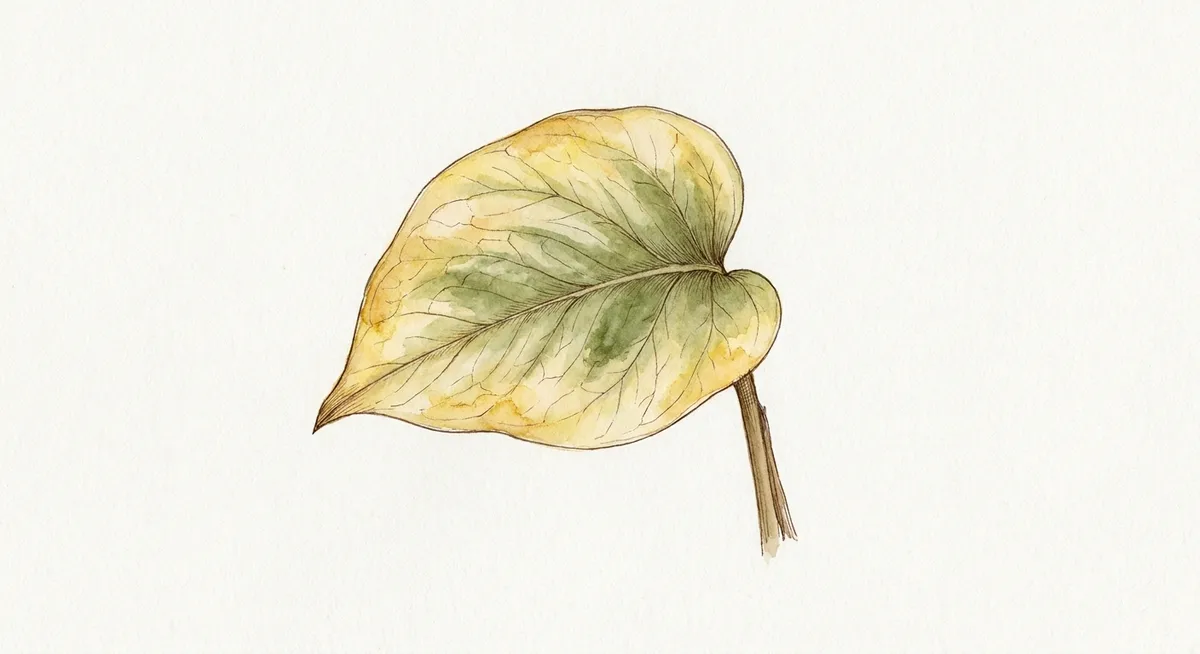
- Uniform yellowing of older leaves near the base of the stems or center of the pot
- Soft, floppy leaf texture rather than firm foliage
- Potting soil remaining damp or heavy two weeks after watering
- Noticeable slowdown in new vine growth
- Occasional shedding of completely yellowed basal leaves
Causes
- Reduced daylight and sun intensity: Shorter autumn days slow the rate of photosynthesis, prompting the plant to shed less efficient older leaves to conserve energy.
- Seasonal overwatering: Because cooler temperatures and dim light stall plant growth and slow evaporation, continuing a summer watering routine keeps the root zone waterlogged.
- Temperature fluctuations and drafts: Exposure to temperatures below 50°F (10°C) near uninsulated window glass or exterior doorways stresses tropical roots and foliage.
- Continued fertilizer application: Feeding during autumn rest periods can lead to fertilizer salts accumulating in the substrate, stressing root hairs.
- Natural leaf senescence: Older leaves at the root crown naturally reach the end of their lifespan and senesce as the plant redirects resources.
How to tell it apart
Feel the soil and check the affected leaves. If the yellow leaves are soft and pliable while the potting mix feels cold and wet 2 inches below the surface, reduced seasonal water uptake and overwatering are almost certainly the cause. If only one or two isolated leaves at the very base turn yellow while all trailing tips remain firm and glossy green, the plant is likely undergoing routine autumn shedding. If yellowing is accompanied by speckling, check the leaf undersides with a bright light to rule out sap-sucking pests. Note that experts disagree on the role of indoor heating: some university extension sources note dry air rarely causes widespread yellowing on pothos, while others emphasize that hot air blowing directly from heating vents can cause rapid tissue stress.
- Underwatering and dry heat stress
- Underwatered pothos leaves curl inward, feel crisp or papery rather than limp, and develop dry, brown tips, while the entire container feels unusually featherlight.
- Spider mite or pest damage
- Pests cause fine yellow stippling or mottling across leaf surfaces alongside fine webbing or sticky residue, rather than an even, solid yellow leaf blade.
- Fungal root rot (Pythium or Rhizoctonia)
- Advanced root rot turns lower vine stems black and mushy at the soil line, causes rapid leaf loss across multiple vines, and produces a sour or swampy odor from the drainage holes.
- Cold shock
- Cold drafts cause sudden translucent, water-soaked, or blackened patches on the foliage closest to window glass within 24 to 48 hours of an outdoor cold snap.
Treatment
- Pause watering until the upper root zone dries Stop watering by the calendar. Push your finger 1.5 to 2 inches deep into the soil; only water when that top section feels entirely dry to the touch and the pot feels noticeably lighter when lifted.
- Drain the catch tray after every watering When watering, add room-temperature water until it drains freely out the bottom, wait 15 minutes for excess moisture to collect in the saucer, and then empty the saucer completely so the roots never sit in standing water.
- Increase available light and buffer temperatures Move the plant closer to an east- or south-facing window to offset lower autumn sun angles, but ensure the foliage stays at least 6 to 12 inches away from cold window glass and active heating vents.
- Suspend fertilizer until spring Hold off on all liquid houseplant fertilizers through late fall and winter; resume feeding at half strength only when vigorous growth returns around March or April.
- Decide whether to prune or retain yellow leaves Horticultural sources disagree on leaf removal: some suggest leaving yellowing foliage until it detaches with a gentle tug so the plant can reabsorb mobile nutrients like nitrogen, while others advise cutting them away to prevent fungal decay. If you choose to prune for aesthetics, snip the yellow leaf stem at its base using shears wiped clean with rubbing alcohol.
Prevention
- Shift from a summer watering schedule to checking soil moisture depth once a week starting in early autumn.
- Keep pothos in rooms that stay consistently between 65°F and 80°F, away from drafty windows, exterior doors, and direct heating vents.
- Wipe dust off foliage monthly using a soft, damp cloth so leaves can absorb maximum light during shorter days.
- Ensure the pot has functional drainage holes and the potting medium contains perlite or bark to maintain root aeration.
When to worry
Losing two to four older leaves over several weeks in autumn is a normal response to seasonal changes. You should intervene immediately if yellowing rapidly climbs up toward the growing tips, if multiple stems turn soft and black near the soil surface, or if the soil stays waterlogged for three weeks without drying.
Safety
Pothos (Epipremnum aureum) contains insoluble calcium oxalate crystals that are toxic to cats, dogs, and humans. Chewing the foliage causes intense oral irritation, swelling of the tongue and lips, excessive drooling, vomiting, and difficulty swallowing; if ingested, contact a medical doctor, veterinarian, or animal poison control hotline immediately. If you apply any insecticidal soap or horticultural product for suspected pests, store it in its original container out of reach of children and pets, and follow the product label instructions carefully.
FAQ
Will yellow pothos leaves ever turn green again?
No. Once a pothos leaf turns completely yellow, its chlorophyll has degraded irreversibly, and the leaf will not regain its green coloration.
Should I repot my pothos if leaves turn yellow in fall?
Avoid repotting in the fall unless the plant has active, severe root rot; disturbing roots when the plant's metabolic rate is low adds unnecessary stress.
How often should I water a pothos during fall and winter?
Do not follow a set day schedule; water only when the top 1.5 to 2 inches of soil feel completely dry, which often means watering every 10 to 20 days depending on your home's humidity and light levels.
Can dry winter heating cause yellow leaves?
Low ambient humidity rarely turns pothos leaves fully yellow on its own, but hot, dry airflow blowing directly from an active heat register or radiator can scorch foliage and trigger yellowing.
Sources
- How to Grow Pothos Indoors (Epipremnum spp.): Care, Cultivars, and Common Problems - Clemson HGIC
- Pothos as a Houseplant - Penn State Extension
- Pet Safe Plants to Grow Indoors this Fall & Winter - University of Georgia Extension
- Pothos plant has yellow leaf and brown-spotted leaf #855914 - Ask Extension (University of Maryland HGIC)
- lowlightleaf.com
- clemson.edu
- getplanta.com
- edsplantshop.com