
Money Tree Brown Spots on Leaves: Causes and Fixes
Brown spots on money tree leaves are most likely caused by overwatering and poor drainage leading to root stress or fungal leaf spot, though direct sun scorch and dry air are also common culprits.
Not sure it's this? Scan your plant — free
What it is
Learn why money tree leaves develop brown spots, from watering issues to fungal leaf spot, and how to treat your houseplant with easy care adjustments.
Also called: Money tree brown spots, Pachira aquatica leaf spot, Money tree anthracnose, Money tree leaf scorch
Plants affected: Pachira aquatica, Pachira glabra, Money tree, Guiana chestnut
Symptoms
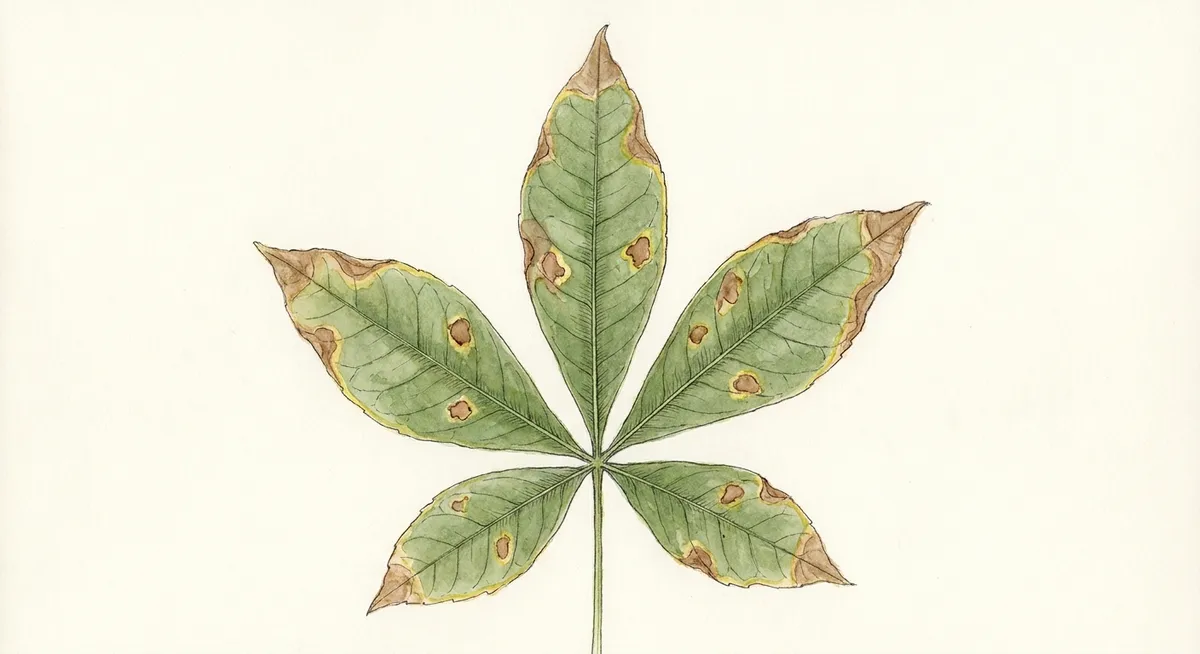
- Soft, dark brown or water-soaked spots across the leaf blades
- Brown lesions surrounded by distinct yellow halos
- Crisp, brittle brown leaf tips and margins
- Pale, bleached, papery brown patches on upper foliage
- Premature leaf drop following spot development
Causes
- Overwatering or poorly draining soil suffocating roots
- Fungal leaf spot pathogens (such as Anthracnose) encouraged by wet foliage
- Direct sunburn through intense window glass
- Low indoor humidity combined with dry heating or air conditioning drafts
- Underwatering leading to desiccation and tip dieback
How to tell it apart
Check the texture, location, and soil moisture. If the spots are dark, slightly soft, or outlined by a yellow halo and the soil feels persistently damp, root stress or fungal leaf spot is the most probable cause. If the spots are dry, pale, and papery on leaves closest to an unshaded window, sun scorch is likely. If only the outer leaf tips and edges are crispy and brittle while the soil is dry, low humidity or underwatering is the primary trigger.
- Sunburn / Light scorch
- Sun scorch creates dry, bleached tan or paper-thin brown patches exclusively on the top leaves facing direct sunlight, lacking the concentric rings or yellow halos typical of fungal infections.
- Spider mite feeding injury
- Spider mites cause widespread tiny yellow or bronzed stippling rather than solid brown spots, often accompanied by fine silky webbing on the undersides of the leaflets.
- Low humidity tip burn
- Low humidity affects only the extreme tips and margins of the leaflets, leaving them dry and brittle while the center of each leaf blade stays smooth and green.
Treatment
- Check soil moisture and calibrate watering Probe the potting soil with your finger or a wooden skewer to a depth of 2 to 3 inches. Only water when that top zone feels dry to the touch. When watering, saturate the soil thoroughly until water drains freely from the pot's bottom holes, then empty the drip tray after 15 minutes so the plant never sits in standing water.
- Prune away severely diseased or damaged foliage Using clean shears sterilized with 70% isopropyl alcohol, snip off individual leaflets or whole leaf stems that are more than 50% brown or spotted. Wipe the blades with alcohol between every cut and dispose of clipped leaves in the trash to stop fungal spores from spreading.
- Reposition out of direct rays and drafts Move your money tree to a location that receives abundant bright, indirect light for 6 to 8 hours daily. Keep it at least 2 to 3 feet back from harsh south- or west-facing glass, and well clear of forced-air heating vents and air conditioners.
- Elevate ambient humidity without wetting the leaves Maintain indoor humidity around 50% using a cool-mist room humidifier placed 3 to 4 feet away, or place the pot on a shallow tray filled with pebbles and water, ensuring the pot base rests above the water line. Avoid spraying the leaves directly, as prolonged surface wetness encourages fungal spores to germinate.
- Apply a protective indoor-safe fungicide if spots spread If circular spots with yellow halos continue spreading to new leaves despite proper watering, apply a copper-based fungicide or biofungicide labeled for indoor plants. Lightly coat the upper and lower leaf surfaces, following label directions for application frequency, typically every 7 to 14 days until new growth emerges healthy.
Prevention
- Always plant in a container with functional drainage holes using a loose, well-aerated potting mix containing perlite or bark.
- Water only when the top 2 to 3 inches of potting mix feel dry, adjusting frequency lower during dark winter months.
- Water at the soil surface, keeping water off the foliage and stems.
- Ensure moderate air circulation around the plant canopy without exposing it to cold drafts.
- Inspect leaves weekly for signs of pests or spotting so issues can be isolated early.
When to worry
Worry if the braided trunks become soft, squishy, or wrinkled near the soil base, if leaves drop rapidly in large clusters, or if the soil produces a stagnant, sour smell. These signs indicate severe root rot. Unpot the plant immediately, cut away black, mushy root sections, and repot into fresh, well-draining soil.
Safety
Keep fungicides and rubbing alcohol stored securely out of reach of children and pets, wear gloves when applying treatments, and strictly follow all product label directions. While the money tree (Pachira aquatica) is classified as non-toxic to cats and dogs by the ASPCA, chewing tough foliage can cause mild stomach upset or vomiting; if your pet eats foliage and displays distress, consult your veterinarian or an animal poison hotline.
FAQ
Should I cut off money tree leaves that have brown spots?
Yes, if a leaflet is heavily spotted, yellowing, or more than half brown, cut it off with sterilized shears. Dead tissue cannot heal, and removing it reduces the chance of fungal spores spreading to healthy leaves.
Can money tree brown spots turn green again?
No, once leaf cells turn brown and dry out, that tissue is permanently dead. Focus on correcting watering and light so all upcoming leaves emerge healthy and green.
How often should I water my money tree to avoid leaf spots?
Water according to soil dryness rather than a fixed calendar schedule. In average indoor conditions, watering every 1 to 2 weeks is typical, but always confirm the top 2 to 3 inches of soil have dried before adding water.