
Fungus Gnats in Houseplant Soil: Causes and Fixes
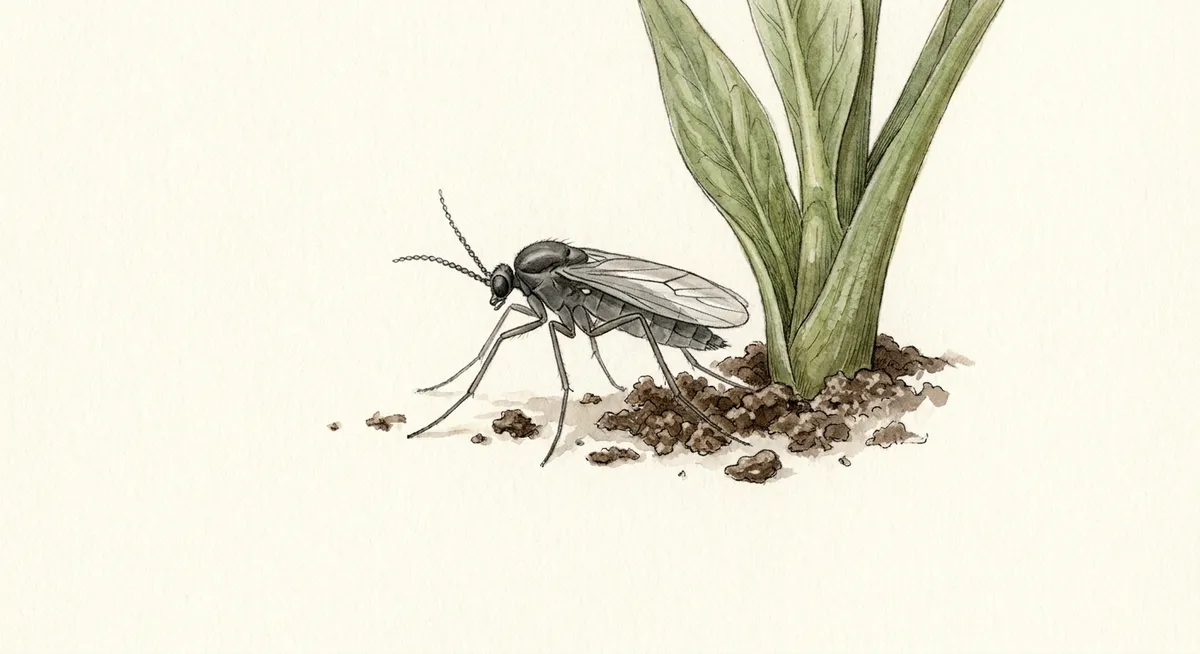
Tiny black flies hovering around your houseplant's soil are most likely fungus gnats, harmless nuisance insects whose larvae thrive in persistently moist potting mix and organic matter.
Not sure it's this? Scan your plant — free
What it is
Learn why fungus gnats infest houseplant soil and how to eliminate them using soil-drying techniques, sticky traps, and biological controls.
Also called: Dark-winged fungus gnats, Sciarid flies, Soil gnats
Plants affected: Pothos, Monstera, Peace lily, Snake plant, Fiddle leaf fig, Ferns, Any indoor plant potted in organic potting soil
Symptoms
- Small, mosquito-like black flies crawling on soil or flying erratically around pots and windows
- Sudden bursts of flying insects immediately after watering
- Slender, translucent worm-like larvae with black heads in the top 2 inches of potting mix
- Slight yellowing, leaf drop, or slowed growth in young seedlings or root-bound plants
Causes
- Persistent surface moisture from overwatering or watering on a rigid schedule
- Poor container drainage, heavy potting mixes, or water pooled in saucers
- Potting soil rich in uncomposted peat, bark, or decaying root debris
- Introducing new houseplants or bags of potting soil that already carry eggs or larvae
How to tell it apart
Look closely at the flying adults: they are delicate, dark-gray to black flies about one-eighth of an inch long with long legs, slender antennae, and a weak, wandering flight path. Under a magnifying lens, their clear wings show a distinct Y-shaped fork in the veins. In the soil, place a raw potato slice cut-side down for 48 hours; if fungus gnat larvae are present, tiny translucent maggots with shiny black head capsules will crawl onto the potato to feed.
- Fruit flies
- Fruit flies have stouter, tan-to-brown bodies with red eyes and hover near ripe kitchen fruit or trash cans, whereas fungus gnats stay close to damp potting soil and window sills.
- Shore flies
- Shore flies are stockier, have very short antennae, display tiny pale spots on their darker wings, and fly much faster and more deliberately than fungus gnats.
- Drain flies
- Drain flies have fuzzy, broad wings that rest flat like tiny moths and breed inside plumbing traps rather than houseplant soil.
- Springtails
- Springtails are tiny, wingless soil insects that spring several inches into the air when touched, remaining entirely on or within moist soil rather than flying.
Treatment
- Let the top 2 inches of soil dry completely Delay watering until the upper 2 to 3 inches of potting mix feels dry and light to the touch. Gnat eggs and newly hatched larvae desiccate and die quickly in dry soil, effectively breaking their reproductive cycle within 10 to 14 days.
- Capture adult flies with yellow sticky cards Cut small yellow sticky cards into squares and stake them horizontally just above the soil surface in infested pots. Keep them in place for 3 to 4 weeks, replacing cards as they fill with insects, to remove egg-laying females before they can breed.
- Drench soil with a biological larvicide When watering is necessary, treat the soil with a biological larvicide containing Bacillus thuringiensis subspecies israelensis (Bti). Drench the root zone thoroughly every 7 to 10 days for 3 consecutive waterings to eliminate emerging larval generations. Always follow the label directions carefully and keep the product stored safely away from pets and children.
- Water plants from the bottom Fill each plant's saucer or an outer tray with water and let the pot absorb moisture from the base for 20 to 30 minutes, then discard any remaining liquid. This keeps root zones hydrated while leaving the top layer of potting mix dry and inhospitable to egg laying.
- Apply beneficial nematodes for stubborn infestations If gnats persist after two weeks, apply beneficial nematodes (Steinernema feltiae) mixed into water as a root drench. These microscopic organisms actively hunt and consume gnat larvae in the soil without harming roots. Follow all package handling directions and keep unused portions out of reach of children and pets.
Prevention
- Probe the top 2 inches of soil with your finger or a moisture meter before watering, watering only when required.
- Empty drainage saucers and decorative outer pots within 30 minutes of watering so roots never sit in standing water.
- Quarantine all newly purchased indoor plants for two weeks to watch for emerging adults before placing them near your collection.
- Topdress the soil surface with a half-inch barrier of horticultural coarse sand or fine pumice to deter adults from depositing eggs.
- Remove dead foliage and spent blooms promptly from the soil surface to eliminate the decomposing material that fungal larvae eat.
When to worry
Adult fungus gnats are primarily an annoyance rather than a plant killer, and mature houseplants rarely suffer permanent harm. However, you should take immediate action if you notice seedlings wilting, young cuttings failing to root, or mature plants exhibiting sudden leaf loss alongside heavy infestations, as dense larval feeding can strip fragile root hairs and open roots to secondary fungal rots.
Safety
Keep all soil treatments, biological larvicides, and sticky traps stored in their original labeled packaging out of reach of children and pets, and apply them strictly according to product instructions. Additionally, many popular houseplants (such as philodendrons, dieffenbachia, and monsteras) contain insoluble calcium oxalates that are toxic to cats, dogs, and young children; if a person or animal chews on a toxic houseplant, rinse their mouth and contact a doctor, veterinarian, or animal poison control center immediately.
FAQ
Do fungus gnats bite humans or pets?
No. Adult fungus gnats lack biting mouthparts and do not feed on humans or animals, making them completely harmless to touch.
Do apple cider vinegar traps work for fungus gnats?
No, vinegar traps are formulated to attract fruit flies that seek fermenting sugars. Fungus gnats are drawn to soil moisture and yellow color, making yellow sticky cards far more effective.
Can fungus gnats kill an indoor plant?
In mature plants, fungus gnats rarely cause fatal damage on their own. However, in delicate seedlings, propagations, or plants already weakened by overwatering, larvae can eat root tips and contribute to fatal root rot.
Does cinnamon get rid of fungus gnats in soil?
Sprinkling cinnamon across the soil surface can slightly inhibit surface mold and fungi that larvae consume, but it rarely cures an established infestation by itself without reducing watering.