
Black spot on rose leaves in fall: causes and fixes
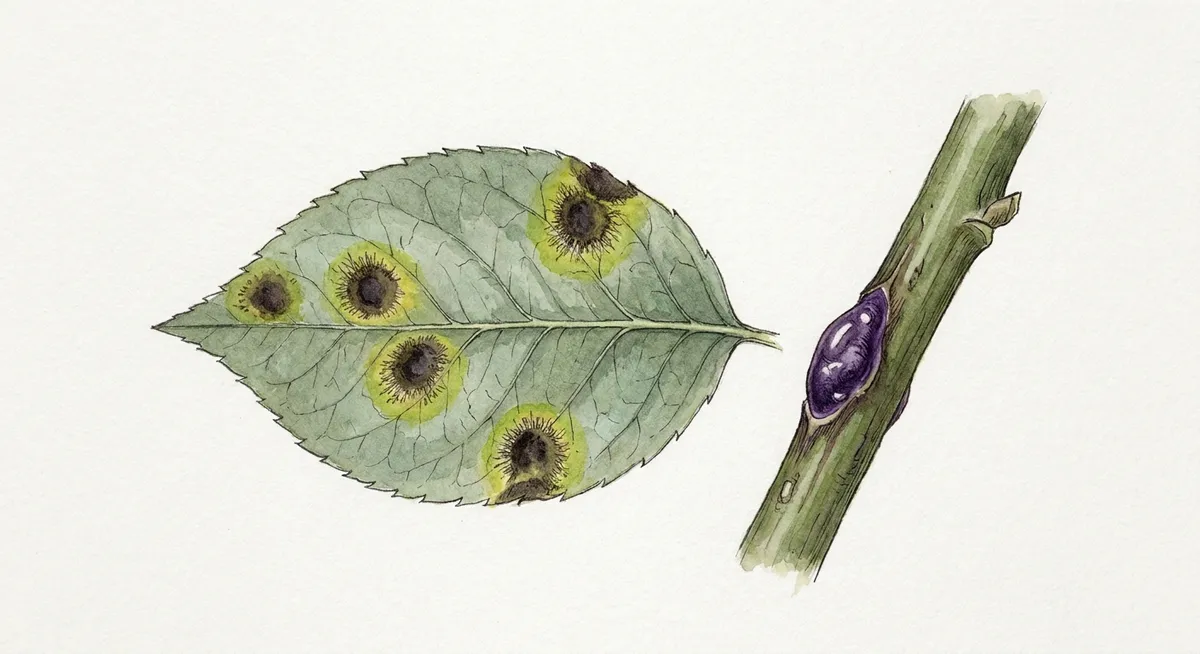
Black spots appearing on your rose leaves in fall are most likely caused by rose black spot, a widespread fungal disease that thrives in humid weather and overwinters in fallen garden debris.
Not sure it's this? Scan your plant — free
What it is
Learn why black spots appear on rose leaves in fall, how to clean up debris before winter, and how to stop the fungus from returning next spring.
Also called: Diplocarpon rosae, Rose leaf blotch, Blackspot of rose
Plants affected: Roses (Rosa spp.), Hybrid tea roses, Shrub roses, Floribunda roses, Climbing roses, Miniature roses
Symptoms
- Circular to irregular dark brown or black spots on the upper leaf surface, up to a half-inch in diameter
- Distinct feathery or fringed edges radiating from each dark lesion
- Bright yellow halos forming around the black spots, often spreading across the entire leaflet
- Premature leaf drop starting from the bottom of the bush and working upward
- Raised, purplish-red to black blistering blotches on young, green first-year canes
- Stunted growth, sparse foliage, and diminished autumn blooms
Causes
- Infection by the fungal pathogen Diplocarpon rosae
- Cool to warm, humid fall weather and extended periods of leaf wetness lasting six hours or more
- Rainfall or overhead watering splashing fungal spores from soil or fallen leaves onto foliage
- Dense plant canopy or crowded borders restricting airflow and slowing down drying times
- Accumulated leaf litter from earlier in the season harboring active spores
How to tell it apart
To identify rose black spot in autumn, inspect the lower and middle foliage for circular, inky-black spots measuring up to a half-inch across. The most definitive feature is their feathery, fibrillose edges—resembling ink that has seeped into wet paper—which distinguish black spot from other fungal leaf spots. As the infection progresses, the green tissue around each spot turns bright yellow, and affected leaves detach easily at the slightest touch. In severe infestations, check young green canes for raised, dark purple or black blistered patches.
- Downy mildew (Peronospora sparsa)
- Downy mildew produces purplish-red to dark brown spots that are sharply angular and confined by leaf veins, rather than circular with feathery borders. Under humid conditions, downy mildew also develops a fine, grayish-white downy fungal growth on the undersides of the leaves, which black spot never produces.
- Cercospora leaf spot (Cercospora rosicola)
- Cercospora creates round spots with distinctly defined, smooth purplish-red borders and pale tan, gray, or silvery centers, whereas rose black spot creates solid, dark charcoal-to-black blotches with ragged, feathery margins.
- Rose anthracnose (Sphaceloma rosarum)
- Anthracnose spots start dark reddish-brown but quickly develop a bleached, ash-white center surrounded by a crisp red-brown rim. The papery centers often drop out entirely, leaving a characteristic 'shot-hole' appearance that black spot does not create.
Treatment
- Rake and remove every fallen leaf beneath the bush Carefully rake up and collect all dropped leaves and organic matter from underneath the rose canopy this week. Do not leave any leaf litter on the soil, and place the collected debris into sealed household trash bags rather than your home compost bin, where spores can easily survive winter temperatures.
- Strip remaining infected leaves from the canes Gently pull off any remaining leaves showing black spots or yellowing that are still attached to the plant before winter sets in. Removing infected leaves before they fall prevents them from sheltering fungal spores directly over next season's root zone.
- Prune out diseased, cankered canes during dry weather Examine green canes for purplish-black, blistered lesions. Prune infected stems 6 to 8 inches below any visible disease using clean, sharp bypass pruners. Disinfect the blades for 30 seconds with 70% isopropyl alcohol between every cut, and discard all pruned canes in the trash.
- Apply a dormant fungicide spray once all foliage has dropped Once the bush is completely bare and dormant in late autumn, thoroughly spray the canes and the bare soil beneath the plant with a liquid copper fungicide or dormant horticultural oil. Follow the product label precisely for dormant application dilution rates. Always keep children and pets away from the treated area until the spray has dried completely.
- Remove contaminated mulch and apply a clean winter layer Scrape away and bag the top layer of existing mulch under the plant's drip line where splashed fungal spores typically rest. Replace it with a fresh 2-to-3-inch layer of clean wood mulch or compost to create a physical barrier between the soil and next spring's new shoots.
Prevention
- Choose rose cultivars bred for high genetic resistance to black spot and foliar fungal diseases.
- Space bushes at least 3 to 4 feet apart and plant in full sun to ensure rapid drying after rain and dew.
- Water exclusively at ground level using drip irrigation or a soaker hose, avoiding overhead sprinklers.
- Perform annual late-winter pruning to open the center of the bush into a vase shape for optimal airflow.
- Apply a clean, fresh 2-to-3-inch layer of organic mulch each spring to prevent soil-borne spore splashing.
- Disinfect all pruning shears and tools with 70% rubbing alcohol between bushes to avoid transferring spores.
When to worry
Black spot alone in late fall rarely kills a well-established rose bush, since the shrub naturally prepares to shed leaves for winter dormancy. However, you should worry if the plant suffered near-total defoliation early in the season, which depletes stored carbohydrate reserves and leaves the bush vulnerable to severe winter dieback, frost injury, or opportunistic cane cankers. If significant cane dieback occurs or if new spring growth emerges weak and stunted, proactive early-season intervention will be required.
Safety
Wear heavy leather gardening gauntlets to protect your hands and arms from puncture wounds caused by rose thorns, which can introduce soil fungi or bacteria (such as Sporothrix schenckii). If handling dormant sprays like copper fungicides or horticultural oils, always wear protective gloves and safety glasses, store products in their original tightly sealed containers out of reach of children and pets, and follow all label instructions. Keep children and domestic animals away from treated plants until sprays have dried thoroughly. In case of accidental ingestion or chemical splash to the eyes or skin, immediately contact a physician, a veterinarian, or your local poison control center.
FAQ
Should I spray a foliar fungicide on my roses in late fall?
No, standard foliar fungicides are ineffective and unnecessary once autumn arrives and leaves are already dropping. Instead, focus on sanitation now, and apply a dormant copper spray or horticultural oil to bare canes once the bush is dormant.
Will black spot survive freezing winter temperatures?
Yes, the fungus Diplocarpon rosae easily overwinters inside fallen leaf debris and within blistered lesions on green rose canes, ready to produce fresh spores when temperatures rise and rain returns in spring.
Can I compost rose leaves that have black spot?
No, home compost piles rarely sustain the high, uniform heat (around 140°F to 160°F) needed to kill black spot fungal spores. Always seal diseased rose foliage in bags and discard it with municipal waste.
Should I cut my rose bush all the way back in fall to remove the spots?
Avoid severe autumn pruning. Heavy cutting in fall can stimulate tender new growth that will freeze during the first hard frost, damaging the shrub. Only prune out visibly cankered canes now, reserving main structural pruning for late winter or early spring.